The following table provides the approximate value of the
chess pieces. We assign a value of 1 point to the basic unit, the pawn.
Of course, the king is not included in the table because, in a real
sense, it has infinite value.
Use the values in this table as a
rough guide. By that, I mean that a rook is roughly worth as much as a
knight and two pawns. A queen is worth approximately as much as a rook,
knight, and pawn. Two rook rooks are roughly equivilent to a queen plus a
pawn. Of course, in most situations, there are many other factors to
consider, especially the relative activity of the pieces.
Queen 9 points
Rook 5 points
Bishop 3+ points
Knight 3 points
Pawn 1 point
You
will also note that the bishop receives a value slightly greater than
the knight. The bishop is usually, though not always worth a bit more
than a knight. See the special section basic bishop strategy for more
information on why this might be so.
Note also that there are
many moments when it will be to your advantage to give up or "sacrifice"
some material in inorder to gain other advantages. By giving up a pawn,
you might gain an important square for your knight or an open file for a
rook. By giving up a rook or queen, you might be able to force
checkmate. You should therefore use this table of values only as a rough
guide and not as the sole consideration in your play.
Thursday, July 12, 2012

Wednesday, July 11, 2012
Great Ronald Reagan Quotes
His definition of federal economic policy
If it moves, tax it. If it keeps moving, regulate it. And if it stops moving, subsidize it.
On Lyndon Johnson's Great Society
We declared war on poverty, and poverty won.
On big government
A government bureau is the nearest thing to eternal life we'll ever see on this earth.
It is an alimentary canal with an appetite at one end and no sense of responsibility at the other.
On learning that government warehouses currently had 478 million pounds of surplus butter
Four hundred and seventy-eight million pounds of butter! Does anyone know where we can find 478 million pounds of popcorn?
On socialism
A man goes up to a grocery store clerk in Moscow and asks for a kilogram of beef, half a kilogram of butter and a quarter kilogram of coffee. "We're all out," the clerk says, and the man leaves.
Another man, observing this incident, says to the clerk, "That old man must be crazy." The clerk replies, "Yeah, but what a memory!"
Reagan told this one to Mikhail Gorbachev
An American and a Russian were arguing. The American said, "Look, I can go into the Oval Office, pound the President's desk and say: Mr. President, I don't like the way you're running our country."
And the Russian responded, "I can do that." The American said, "You can?"
The Russian replied, "Sure. I can go into the Kremlin, into the General Secretary's office, and say: Mr. General Secretary, I don't like the way that President Reagan is running his country."
(Apparently Gorbachev was greatly amused.)
Reagan enjoyed telling this Winston Churchill story
Churchill stops by a men's room where he encounters Labourite Clement Attlee, the man who replaced him as Prime Minister after WWII.
When Attlee took the next urinal, Churchill moved a few places away.
"My, my, Winston," Attlee said. "Are we being modest?"
Churchill replied: "Not at all, Clement. It's just that whenever you Labourite chaps see something that is large, privately owned and working well, you want to nationalize it."
On sexually explicit scenes in modern movies
I have always thought it was more suggestive to see a hand reach out and hang the Do Not Disturb sign on the door.
On choosing a new member for the Council of Economic Advisers
I've got several millionaires in my Cabinet who have made their own money. Why do I need a bunch of economists?
On the shrewdness of the common man
A lawyer and a farmer have a head-on collision on a country road. No one is badly hurt, but both men are shaken. Farmer goes to his car and brings out a flask and offers it to the lawyer. "You look like you need a drink." Lawyer takes a swig and then, at the farmer's urging, another.
He hands the flask to the farmer. "Your turn." Farmer: "No thanks. I'm waiting for the sheriff."
On human nature
Two campers were hiking in the woods when they spotted a grizzly bear headed straight for them. One of them reached into his backpack and began to put on his running shoes.
"What are you doing," his friend said. "You can't possibly outrun a grizzly."
The other fellow said, "I don't have to outrun the grizzly. I just have to outrun you."
If you've found this or any of my articles helpful, would you consider a small donation of any size. It would be much appreciated and help us to keep this site going,..and going,...and going,.. Please use the PayPal link below to make that donation.
Chess: How Chess Games End
Checkmate rarely happens
Not every game ends with a checkmate. Many masters, before they are "mated," choose instead to resign. They believe that there is no longer any hope, so they award the win to their opponent. In tournaments, wins receive one point, recorded 1-0 when white wins and 0-1 when black wins. Many beginners are confused by such resignations. "Why did he resign here?" I often hear from my students. Figuring out the reason can be very instructive. And sometimes, master mistakenly resign when they were not losing. That is quite rare, but it's fun to see and talk about!
DRAWS
Between evenly matched opponents, chess games will often end in draws. So what's a draw? That's when nobody wins. In tournaments, draws are recorded as ½ - ½, essentially half a point rather than the full point for a win. There are six kinds of draws to discuss briefly.
(1) Draws by agreement
This kind of draw is the most common. At any time in the game, you can offer a draw to your opponent. Be mindful of good etiquette, however. Don't offer a draw on every move! That's just flat-out rude. And be sure to offer the draw correctly. Make your move, offer the draw ("I offer a draw" is fine) and only then press your clock (assuming that you are using a chess clock). An offer of a draw without making a move is NOT a legal offer and can be ignored.
Here's a famous grandmaster draw, a game drawn quickly. This game was famous because Tal already had 12 points in their 1960 world championship match. This draw resulted in the crowning of a new world chess champion! Tal had steered the game into a position in which Black has no meaningful chances to win, and Tal also had a large lead in the match.
(2) Stalemates!
In chess, each side must move. If the player who must move has no legal move (and is NOT in check), the game ends as a draw, a STALEMATE. Some stalemates are quite common. Here's an example of a king and pawn endgame that ends as a stalemate. At the end of the game, the Black king has no moves and is NOT in check.
Many examples are much more complicated and can be quite exciting.
(3) Perpetual check
Draws by perpetual check occur when one player, usually though not always with a queen, can deliver check regardless of the square chosen by the opponent's king. There's simply no escape from the checks.
(4) Threefold repetition
You or your opponent can claim a draw if the same position occurs three times in the same game, all with the same player to move. Such repetitions can easily occur in endgames when one player is checking another. To claim such a draw, you need to have an accurate scoresheet and demonstrate to the tournament director that the claim is valid. In one game between Fischer and Spassky, Fischer incorrectly claimed such a draw but Spassky, sure that Fischer must have been correct, agreed to the draw!
(5) Insufficient mating material
If neither side has sufficient material to win, either player can claim a draw. For example, suppose that each side has a king and a bishop. Try as you will, there's no way to FORCE a win. You can win force checkmate with a king plus a bishop and a knight (though some masters have trouble doing that!), but there is no way to FORCE checkmate with a king and two knights.
(6) The 50 move rule
This last rule is merciful. If after 50 consecutive moves by both players, no pawn move or capture has occurred, either player can claim a draw. Obviously, you will need to have kept an accurate score sheet to make this claim!
Tuesday, July 10, 2012
Chess: Glossary of Chess Terms (even some I didn't know)
Alekhine: The 4th World Champion. Known for his guile and remembered for defeating the "Chess Machine," Jose Capablanca. He was also one of the original five grandmasters named by Czar Nicholas.
algebraic: A type of chess notation which uses a grid with coordinates, employing letters and numbers, to describe squares on a chessboard.
Bishop: A piece that moves diagonally on one color only. Each player has two Bishops at the start of the game.
board: Split into 64 squares, chess is played on this. Can be made of almost any material.
Botvinnik: The World Champion who succeeded Alekhine, Mikhail "Iron Mike" Botvinnik regained the title many times.
Capablanca, "Capa": Jose Capablanca made chess look so effortless, he was known as the "Chess Machine."
capture: To take an opponent's piece off the board and out of play.
castle: A special move in which a King and a Rook move simultaneously. Also, an informal, alternative name for a Rook.
Chigorin: The first Russian chessplayer. He is considered, by many, to be the founder of the "Russian School of Chess."
clock, chessclock: An object used to time a chess game. The usual penalty for exceeding the time limit is the loss of the game.
correspondence chess: A game in which both sides send their moves through the mail or by e-mail. (Formerly referred to as "postal chess")
descriptive: Also known as English Descriptive Notation. The form of notation in which each square has two names, depending on which side of the board is moving a piece. Most modern players consider this method archaic. See algebraic.
en passant: A special type of pawn move. It is rarely known by non-tournament players.
endgame: The portion of the game when most of the pieces have been taken off the board.
file: Vertical columns. labeled A to H, on the chessboard.
Fischer: The first world champion born in the U.S. Also, the youngest grandmaster up to that time.
flag: The term used for the plastic piece on a chess clock that indicates a time forfeit.
grandmaster: The highest level title that can be achieved in chess.
Gruenfeld Gambit: A pawn (or more important piece) sacrifice, played by Black in the Gruenfeld Defense.
handicap: An attempt, usually affecting time or material, to make a stronger player's challenges more equal to that of the weaker player.
illegal position: A position in which both Kings are in check or a number of factors are involved which make a position illegal.
Karpov: The past FIDE World Champion. He succeeded Bobby Fischer when Fischer forfeited the title.
Kasparov: The successor to Anatoly Karpov. He later formed his own chess organization, the Professional Chess Association (PCA).
King: The most important piece in a chess game.
Knight: The only piece that can jump over pieces in a chess game.
Legall's mate: A specific pattern that arises when one side sacrifices the Queen to checkmate with one Bishop and 2 Knights.
Marshall: A former U.S. Champion who coined the term swindle for a desperate trap that saves or wins the game.
middlegame: The part of the game that occurs after the opening and before the endgame.
Morphy: Considered by many to be the first unofficial world champion. He beat all the best player in Europe, but Howard Staunton refused to play him for the title.
notation: The method used to record a game. See algebraic.
opening: The beginning phase of a chess game.
passed pawn: A pawn with no opposition on an adjoining file.
Pandolfini: A prolific author of chess books, a national master, and a pivotal character in the book Searching for Bobby Fischer.
pawn: The weakest unit on a chessboard; but the only piece that can be promoted.
perpetual-check: When one side can continually check the other.
Philidor: A famous player, most remembered for the memorable phrase, "The pawns are the soul of chess."
Polgar: The last name of a family of chess players, which includes GM Zsusza Polgar, the Women's World Champion.
promotion: An event that occurs when a pawn reaches the opponents first rank.
Queen: The most powerful chess piece.
rank: Horizontal rows on the chessboard, numbered from 1 to 8.
Reinfeld: A National Master and author of hundreds of chess books.
Reti: One of the founders of the "Hypermodern" school. He gave Jose Capablanca his only tournament loss in 10 years. Rook: A piece that moves along ranks and files only.
Sicilian Defence: An asymmetrical answer to White's 1.e4; first played in Palermo in the 1500s. sixty-four (squares): The number of squares on a chessboard.
Smyslov: A former World Champion who beat Botvinnik, but lost the rematch. He has a clear style, good technique and an affinity for the endgame.
Spassky: Former World Champion who beat Tigran Petrosian and lost to Bobby Fischer. He has a "universal" style.
Staunton: A strong player who proclaimed himself world champion. He refused to play Paul Morphy.
Tal: Former World Champion who defeated Botvinnik, but lost the rematch. His fans idolized him and he was probably the most loved world champion in history. He had a speculative attacking style.
tempo: A single move. Very often a chess game becomes a fight for tempo.
threat: The essence of a chess game. Threats can be subtle, mating positional, etc. Threats are what you would do if you could play 12 or more moves without an opponent.
time control: A specific number of moves in a specific amount of time. Time controls can be either traditional or sudden death.
Timman: A Dutch Grandmaster who challenged Karpov for the FIDE World Championship when Kasparov and Short formed the PCA.
tournament: Unlike a match, more than two players are involved.
trap: A series of moves that leads to a favorable outcome for the person who sets it.
variation: The analyses of a chess game; specifically a line of play or annotation.
Waitzkin: A young, strong International Master and the main Character of the book and movie Searching for Bobby Fischer.
zeitnot: The German term for time pressure or having moves to make without a lot of time for thought. Almost always a very stressful situation for any player who finds himself there.
zugzwang: German for "compulsion to move." Instead of automatically recapturing material, one player makes a move that creates a larger threat (such as mate) and gets the material later.
Monday, July 9, 2012
Chess: How to Read and Write Chess: Chess Notation
There are many different ways to write chess moves. The most popular method (described below) is called algebraic notation:
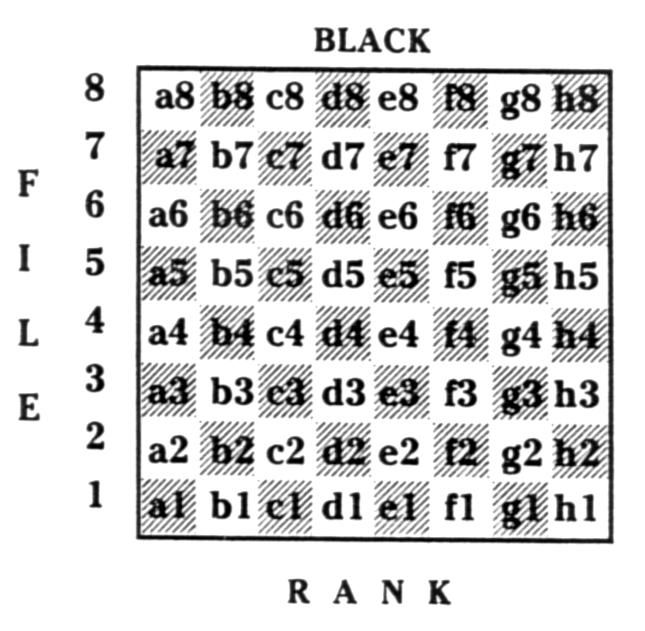
The main idea is that every square has a name like this:
 It looks very complicated but it's not! Each square on a chessboard has a
first name (a letter) and a last name (a number). The letter identifies a
file (column) and the number identifies a rank (row). Now, the
important part is to know how to identify the pieces you are moving. You
just need to use a single capital letter:
K = King Q = Queen R = Rook B = Bishop N = Knight
Note that "P" is not used. Chess players have agreed that a move without a letter — such as e4 — is
understood to be a pawn move. You are almost ready to start using chess notation. Just pay attention to the following symbols:
x = Take or Capture
0-0 = K-side castle
0-0-0 = Q-side castle
+ = check
# = checkmate
! = good move
? = bad move
?? = blunder
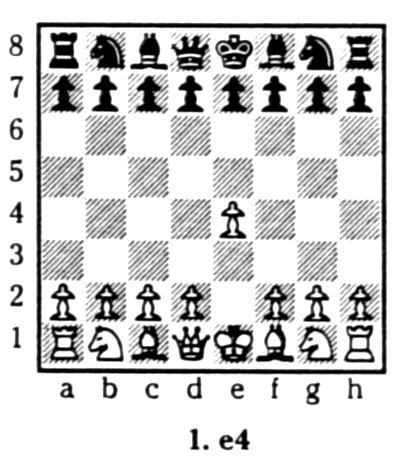
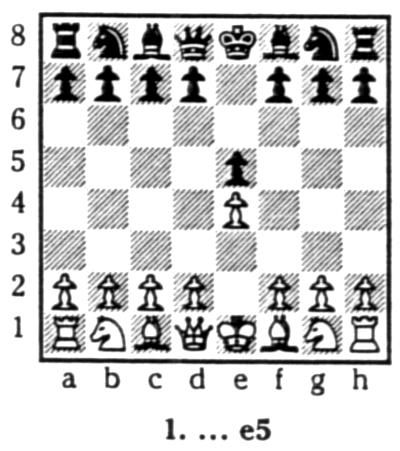
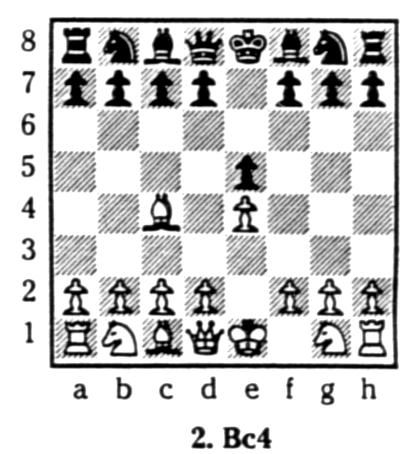
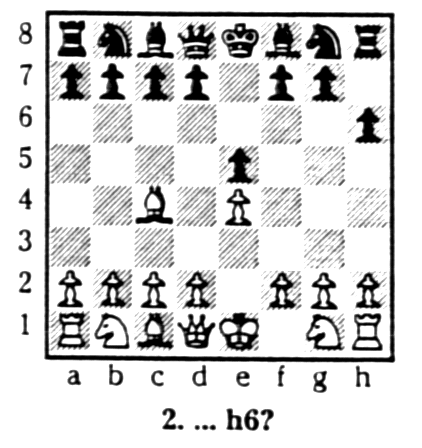
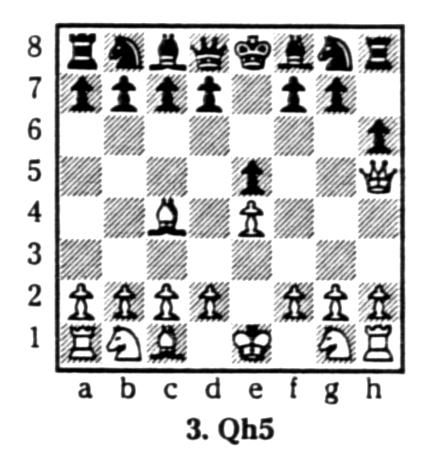
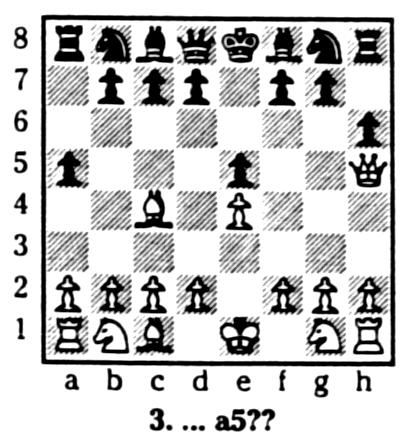
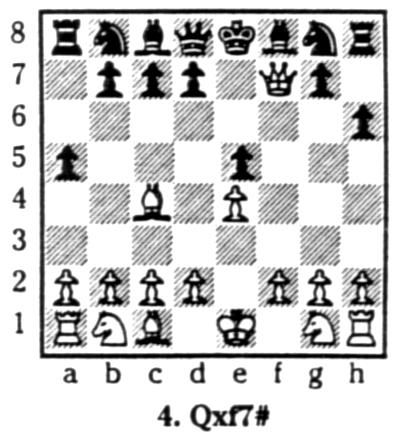
It’s a great idea to note your games. You can analyze and learn from your mistakes. We all make a lot of mistakes when we are learning a new thing. Don’t worry! Mistakes will help you improve your chess skills. Let’s put in practice what you are learning. We will use the famous "Scholar Mate," also called the four–move checkmate.


The main idea is that every square has a name like this:
K = King Q = Queen R = Rook B = Bishop N = Knight
Note that "P" is not used. Chess players have agreed that a move without a letter — such as e4 — is
understood to be a pawn move. You are almost ready to start using chess notation. Just pay attention to the following symbols:
x = Take or Capture
0-0 = K-side castle
0-0-0 = Q-side castle
+ = check
# = checkmate
! = good move
? = bad move
?? = blunder
It’s a great idea to note your games. You can analyze and learn from your mistakes. We all make a lot of mistakes when we are learning a new thing. Don’t worry! Mistakes will help you improve your chess skills. Let’s put in practice what you are learning. We will use the famous "Scholar Mate," also called the four–move checkmate.
Friday, July 6, 2012
Chess: About Check and Checkmate or How to win the game
The main goal of chess is to checkmate your opponent's King. The King is not actually captured and removed from the board like other pieces. But if the King is attacked ("checked") and threatened with capture, it must get out of check immediately. If there is no way to get out of check, the position is a "checkmate," and the side that is checkmated loses.
You may not move into check. For example, moving into a direct line with your opponent's Rook, when if there are no other pieces between the Rook and your King, is not a legal move. Otherwise, the Rook could "capture" the King, which is not allowed.
If you are in check, there are three ways of getting out:
1. Capturing the attacking piece;
2. Placing one of your own pieces between the attacker and your King (unless the attacker is a Knight);
3. Moving the King away from the attack.
If a checked player can do none of these, he is checkmated and loses the game. If a King is not in check, but that player can make no legal move, the position is called a stalemate and the game is scored as a draw, or tie.
Tuesday, July 3, 2012
Chess: Special Moves (really, I'm not making this up)
Castling
Each player may "castle" only once during a game and when conditions are met. Castling is a special move that lets a player move two pieces at once — the King and one Rook. In castling, the player moves his King two squares to its left or right toward one of his Rooks. At the same time, the Rook involved goes to the square beside the King and toward the center of the board (see illustrations at left). In order to castle, neither the King nor the Rook involved may have moved before. Also, the King may not castle out of check, into check, or through check. Further, there may not be pieces of either color between the King and the Rook involved in castling.
Castling is often a very important move because it allows you to place your King in a safe location and also allows the Rook to become more active.
When the move is legal, each player has the choice of castling Kingside or Queenside or not at all, no matter what the other player chooses to do.

En Passant
This French phrase is used for a special pawn capture. It means "in passing," and it occurs when one player moves a pawn two squares forward to try to avoid capture by the opponent's pawn. The capture is made exactly as if the player had moved the pawn only one square forward.

In the diagram, the Black pawn moves up two squares to the square with the dot. On its turn the White pawn may capture the Black one on the square marked with the X. If the White player does not exercise this option immediately — before playing some other move — the Black pawn is safe from "en passant" capture for the rest of the game. But new opportunities may arise for each pawn in similar circumstances.
Each player may "castle" only once during a game and when conditions are met. Castling is a special move that lets a player move two pieces at once — the King and one Rook. In castling, the player moves his King two squares to its left or right toward one of his Rooks. At the same time, the Rook involved goes to the square beside the King and toward the center of the board (see illustrations at left). In order to castle, neither the King nor the Rook involved may have moved before. Also, the King may not castle out of check, into check, or through check. Further, there may not be pieces of either color between the King and the Rook involved in castling.
Castling is often a very important move because it allows you to place your King in a safe location and also allows the Rook to become more active.
When the move is legal, each player has the choice of castling Kingside or Queenside or not at all, no matter what the other player chooses to do.
En Passant
This French phrase is used for a special pawn capture. It means "in passing," and it occurs when one player moves a pawn two squares forward to try to avoid capture by the opponent's pawn. The capture is made exactly as if the player had moved the pawn only one square forward.
In the diagram, the Black pawn moves up two squares to the square with the dot. On its turn the White pawn may capture the Black one on the square marked with the X. If the White player does not exercise this option immediately — before playing some other move — the Black pawn is safe from "en passant" capture for the rest of the game. But new opportunities may arise for each pawn in similar circumstances.
Subscribe to:
Posts (Atom)